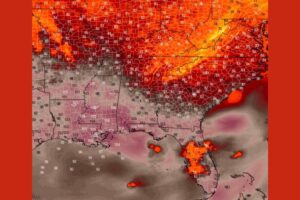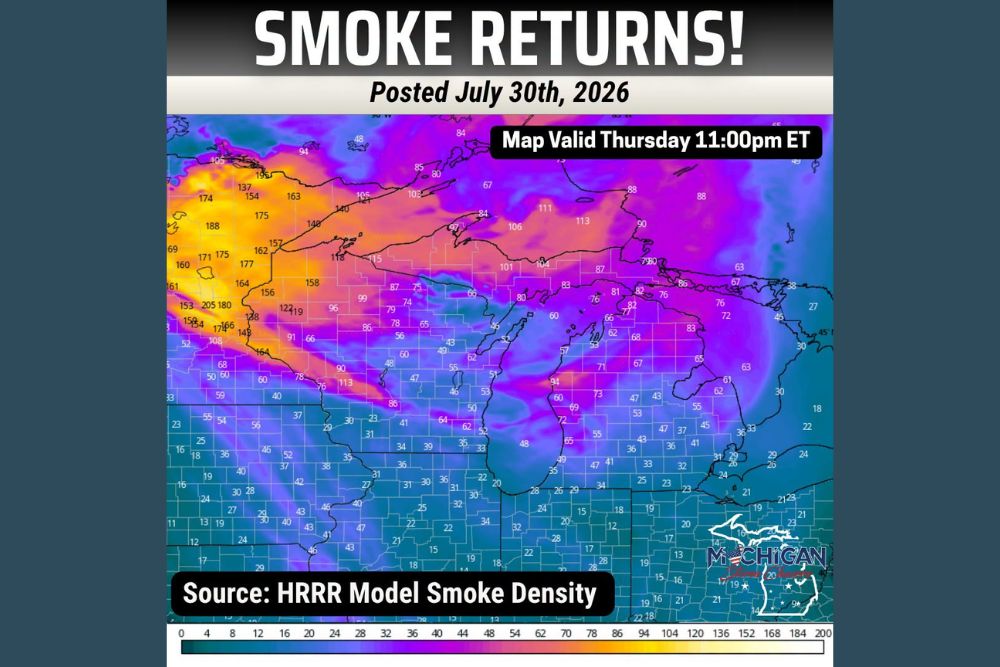
MICHIGAN — Wildfire smoke is returning to the region today, though most of it will remain elevated and is not expected to affect ground-level air quality. Residents across Michigan may notice a hazy look to the sky as the smoke moves through, even though the impact on breathable air should remain limited. HRRR model smoke density guidance valid Thursday at 11 p.m. shows the smoke plume stretching across a wide swath of the Upper Midwest and Great Lakes region.
Smoke Plume Stretches Across the Upper Midwest
HRRR model guidance shows a significant smoke plume extending from the western Great Lakes region eastward, with the highest density values, shown in orange and yellow shading, concentrated across the northwestern portion of the mapped area.
This plume represents wildfire smoke that has traveled a considerable distance before reaching Michigan and the surrounding Great Lakes region, consistent with smoke transport patterns often seen during active fire seasons out west.
Most Smoke Remains Elevated Above the Surface
Despite the widespread presence of smoke across the region, forecasters emphasize that most of it will remain elevated in the atmosphere rather than mixing down to ground level where it would affect air quality.
This distinction is important, as elevated smoke primarily affects the visual appearance of the sky rather than the air people are actually breathing, limiting the health impact compared to ground-level smoke events.
Hazy Skies Expected Across Michigan Today
Residents across Michigan should expect a hazy look to the sky today as the elevated smoke plume moves through the region, even though direct air quality impacts are expected to remain minimal.
This hazy appearance is a visual reminder of the ongoing wildfire activity elsewhere, even for areas that are not experiencing any of the harmful ground-level air quality effects associated with denser, lower-altitude smoke.
Smoke Density Values Vary Significantly Across the Region
The HRRR model smoke density map shows values ranging from under 20 across the eastern Great Lakes to well over 150 in the densest portions of the plume farther west and north.
This wide range in density values reflects the uneven distribution typical of long-range smoke transport, with some areas seeing much thicker haze than others depending on their position relative to the core of the plume.
Air Quality Expected to Remain Largely Unaffected
Despite the widespread presence of smoke on today’s model guidance, air quality across Michigan is expected to remain largely unaffected given the elevated nature of the plume moving through the region.
Residents with heightened sensitivity to air quality changes should still monitor conditions, though the general expectation is that today’s smoke will be more of a visual phenomenon than a health concern for most of the region.